
Industry
Ordering food in Doha: what Qatar’s delivery guidance means for your bill
How to compare app prices, understand cancellation charges and read restaurant ratings—plus seasonal menu updates at Jiwan and IDAM.
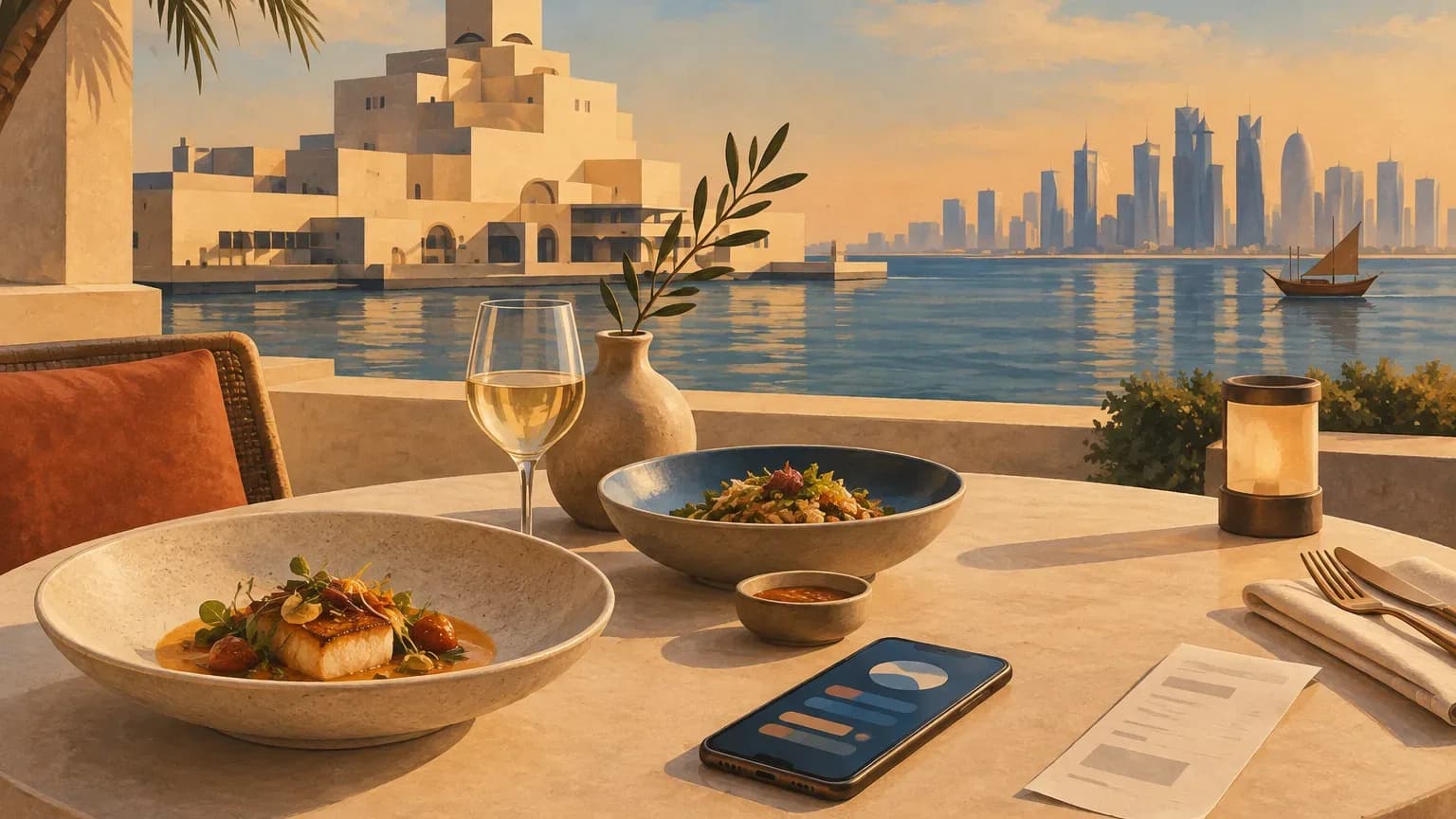
Start with the final total, not just the menu price
Choosing dinner in Doha involves more than deciding what to eat. An app price may differ from the restaurant’s menu, a prominent search result may be sponsored, and a cancellation can carry a cost once preparation begins. Qatar’s Ministry of Commerce and Industry addressed these everyday questions in delivery-platform guidance announced on 28 April 2026.
As of 22 October 2026, the useful distinction is that this is ministry guidance grounded in existing competition and consumer-protection legislation—not an announcement of an entirely new restaurant law. For diners, its value lies in understanding what to compare, what to question and what evidence to keep.
The guidance allows restaurants to maintain separate delivery-platform and in-store price lists, subject to ministry approval. A higher app price is therefore not, by itself, evidence of a breach. Before ordering, compare the final checkout total with the restaurant’s direct-order or dine-in price, while recognising that these are different ways of buying the meal.
Cancellations, promotions and charges at the door
Cancellation responsibility follows fault under the ministry’s guidance. Consumers bear no cost before preparation; after preparation, the guidance refers to actual cost, without additional fees. That is not the same as an unconditional promise of a full refund once cooking has started. If an order becomes disputed, retain screenshots of its status and the cancellation exchange.
Restaurant placement also deserves a closer look. Platforms must disclose paid promotion and their general ranking criteria. A restaurant near the top of an app’s results should not automatically be read as an independently judged recommendation for food or service.
Discounts must be licensed, genuine and time-limited, with before-and-after prices displayed. Check both the reference price and the offer dates rather than relying on the size of the discount alone. A screenshot of the advertised promotion and the final checkout screen can make any later discrepancy easier to explain.
Providers and delivery personnel must not impose additional charges upon delivery. An unexpected payment demand at the door is therefore worth documenting. Keep the order confirmation and a record of the amount requested, rather than relying only on your recollection of the exchange.
A delivery-fee caveat—and where to report pricing concerns
Older delivery-fee figures need care. A ministry statement dated 12 February 2022 specified delivery charges for bikes and vehicles, while the April 2026 announcement discusses platforms determining fair delivery pricing. Those announcements do not establish how the provisions interact or expressly confirm repeal of the earlier limits. The older figures should not be treated as settled current consumer caps without ministry clarification.
For restaurant-pricing complaints, MOCI lists 16001 as a reporting channel. Its 6 January 2026 inspection announcement included restaurants and covered advertised-price accuracy, licensing and practices potentially constituting commercial fraud. This was evidence of enforcement activity, not a new restaurant-pricing law starting that month.
Before calling, it is sensible to gather your receipt, the menu or offer screenshot, the branch name and the purchase date. For a delivery dispute, add the checkout total, order status and relevant messages. Keep commercial-pricing complaints distinct from concerns about food safety: the January announcement concerns commercial-law inspections and consumer protection.
Read the name beside the restaurant stars
When choosing somewhere to dine, a star symbol is only useful if you know who awarded it. Taste of Qatar, launched at the beginning of 2025, is Qatar Tourism’s official restaurant evaluation and classification programme. Its assessments are conducted independently by Ipsos, with compliance checked against the Ministry of Public Health’s Watheq electronic food-safety system.
The inaugural certification announcement describes a three-star classification assessing food quality, service, hygiene and the overall guest experience. A Taste of Qatar three-star classification is not three Michelin stars: the programmes are separate, and the awarding organisation should always accompany the claim.
The official Taste of Qatar listings span fine dining, upscale casual, casual dining, quick-service casual, food trucks and kiosks, and premium cafés. Check the named branch rather than assuming recognition extends across a chain. The listings identify, for example, Dave’s Hot Chicken at Villaggio and Place Vendôme individually.
For scale, Qatar Tourism’s review of 2025 reported up to 800 restaurants inspected nationwide and approximately 150 receiving three-star certification. Those are historical, Qatar-wide programme figures—not a verified October 2026 total or a count confined to Doha.
Food-safety information answers a different question
The Ministry of Public Health’s public food-safety rating search is a separate resource, with fields including establishment name, commercial registration number, activity, status, rating and area. Its Arabic-language notice says establishments with good, very good or excellent compliance levels are eligible to participate in Taste of Qatar. Eligibility is not the same as having received a tourism-programme award.
Use that lookup for its intended purpose, rather than treating a food-safety grade as a verdict on flavour, value or atmosphere. Likewise, national monitoring results should not be mistaken for individual restaurant recommendations.
On 9 September 2026, the ministry reported that 97% of 7,755 food samples tested during January–June 2026 complied with requirements and technical regulations. The programme covers food commodities available in Qatar and imports through border entry points. It does not mean that 97% of Doha restaurants passed inspection, nor does it establish the safety of a particular meal.
For a table out: seasonal returns at Jiwan and IDAM
For diners planning a museum restaurant visit, Qatar Museums announced seasonal returns at two existing Doha venues—not two new openings. Its 1 September 2026 release said Jiwan, at the National Museum of Qatar, had reopened on 30 August with a seasonal menu available as a set menu or à la carte.
Announced dishes included amberjack with citrus and tahini, 12-hour lamb shoulder with mint and pomegranate molasses, and date mahalabia with chilli. The listed reservation number is +974 4452 5725.
The same announcement gave 3 September 2026 as the return date for IDAM by Alain Ducasse at the Museum of Islamic Art. Its “Ember & Tide” menu was announced as a four-course lunch and eight-course dinner, with reservations on +974 4422 4488.
Before booking either restaurant, confirm current menus, prices, operating days and dietary arrangements directly. The announcement supplied no menu prices. Whether ordering to your door or settling into a dining room, the best starting point is the same: check the precise offer, the relevant branch and the final cost.